This is the full evidence review — the citable version of this work, with the complete reference list and disclosures. Read the summary brief →
Particulate Matter and Alzheimer's Disease: Associations, Mechanisms, and Missing Links
Full evidence review — the citable companion to the published summary brief.
Author: Levi Robey · Holistic Quality LLC
Contact: levi@holisticquality.io
Version: 1.0 (full report — the citable version of this work) · Published: 2026-05-29 · Last updated: 2026-09-25
DOI: 10.5281/zenodo.21109168 (this version) · concept DOI 10.5281/zenodo.21109167 (always resolves to the latest version)
Revision note (2026-07-01): completed reference [5] author list (Lancet Planetary Health 2025); disclosed the anchor estimate's very high between-study heterogeneity (I²≈95%); noted that the US annual PM2.5 standard referenced by Cacciottolo 2017 was tightened to 9 µg/m³ in 2024; stated the CC BY 4.0 license in the document body; and recorded the assigned Zenodo DOI.
Revision note (2026-06-12): corrected Grande 2020 mediation characterization; removed unsourced pooled-N from Wilker 2023; clarified Wilker risk-of-bias method (ROBINS-E); completed Lancet PH 2025 citation locator.
Document type: Working evidence review (not peer-reviewed) · Companion brief: holisticquality.io/research/particulate-matter-and-alzheimers
Disclaimer. This is a synthesis of the published scientific literature. It is not medical advice — do not use it to diagnose, treat, or make personal health decisions; consult a qualified clinician. It is not peer-reviewed. It summarizes the state of the evidence and identifies open questions, with every claim cited so readers can verify it independently.
How this was produced. Assembled with AI-assisted literature review and drafting, then human-verified: every cited study was checked against its published source (journal, volume, issue, pages, DOI confirmed; the characterized finding checked against the paper), and any figure that could not be traced to a verifiable source was removed or restated qualitatively. This is a selective synthesis of representative, high-quality studies — not an exhaustive systematic review. Where the evidence is contested, that is stated plainly. Transparency about method is treated as part of the credibility of the result.
Abstract
Long-term exposure to fine particulate matter (PM2.5) is, on balance, more likely than not associated with Alzheimer's disease and related dementias and with faster cognitive decline — though the evidence is heterogeneous, not uniform. The largest and most recent pooled analysis reports a hazard ratio of 1.08 per 5 µg/m³ of long-term PM2.5 exposure (95% CI 1.02–1.14; though with very high between-study heterogeneity, I²≈95%) (source · archived), and the 2020 Lancet Commission lists air pollution among the modifiable risk factors for dementia. At the same time, a deliberately conservative Burden-of-Proof meta-analysis rates the PM2.5–dementia evidence only "weak and/or inconsistent" (two stars; the Alzheimer's-specific association rates three), and another major meta-analysis is null in its overall estimate, with the positive signal concentrated in studies using active case-ascertainment. This discordance points to outcome-measurement quality as a key modifier rather than to absence of effect. The biological case is plausible and supported by animal and in-vitro evidence — neuroinflammation, oxidative stress, blood–brain-barrier disruption, direct translocation of ultrafine particles to the brain, and accelerated amyloid/tau pathology — but human mechanistic data remain limited. Crucially, the evidence supports causation as plausible but not proven: the associations are vulnerable to unmeasured confounding (notably socioeconomic position), exposure misclassification, and reverse causation, and no randomized human trials are possible. This report reviews the epidemiology cohort by cohort, maps the candidate mechanisms with their evidentiary status, applies the Bradford Hill considerations explicitly, catalogs the principal evidence gaps, and lays out the study designs most likely to move the field from association toward causal inference.
1. Introduction and scope
Alzheimer's disease and related dementias are among the most consequential public-health burdens of an aging population, and a growing body of work implicates environmental exposures — air pollution chief among them — as potentially modifiable contributors. In 2020 the Lancet Commission on dementia prevention formally added air pollution to its life-course model of modifiable dementia risk factors, alongside excessive alcohol use and traumatic brain injury [8]. That elevation reflects a maturing epidemiological literature, but it sits atop a still-incomplete causal and mechanistic foundation.
This report examines, specifically, the relationship between long-term fine particulate matter (PM2.5) exposure and Alzheimer's disease / dementia. It is deliberately scoped tightly to airborne particulate exposure and the brain; adjacent particulate questions — most notably microplastics as a particle vector, and the broader chemical-contamination landscape (PFAS and others) — are touched on only where directly relevant (§6) and are treated as separate research artifacts in their own right.
The companion brief (a ~2,000-word summary) states the headline conclusions; this full report restores the cohort-level detail, the mechanistic depth, and the causal-inference analysis that the brief compresses. The two are consistent: the brief is a faithful compression of this document.
2. Background: why particulate matter is a candidate neurotoxicant
PM2.5 — particulate matter with an aerodynamic diameter ≤2.5 µm — is a complex mixture of combustion products, road and brake wear, secondary aerosols, transition metals, and organic compounds. Its small size lets it penetrate deep into the respiratory tract and enter systemic circulation; the ultrafine fraction (<100 nm) has additional routes of concern (§5). Three features make it a biologically credible candidate for neurological harm: it provokes systemic and local inflammation; it carries redox-active metals and organics capable of generating oxidative stress; and a fraction of it can plausibly reach the central nervous system directly. Exposure is also near-universal and chronic — and because people spend the large majority of their time indoors (~87%, per US national activity-survey data [6]), outdoor-monitor-based exposure estimates systematically mismeasure true personal dose, a limitation that recurs throughout the epidemiology.
3. Methods and evidence approach
This is a selective narrative synthesis, not a systematic review: it does not claim exhaustive coverage, a pre-registered search protocol, or formal risk-of-bias scoring across all eligible studies. Studies were chosen to represent the strongest and most informative designs across geographies and exposure-assessment methods — large prospective cohorts, a national administrative cohort, a low-exposure European cohort, and recent meta-analyses — supplemented by mechanistic animal/in-vitro work for biological plausibility. Every citation was independently verified against its published record, and quantitative claims that could not be traced to a named source were removed rather than reported. Effect estimates are presented with their study context (population, exposure metric, adjustment set) because hazard ratios are not comparable across studies without it. Mechanistic statements are flagged by evidentiary level (human vs. animal/in-vitro).
4. The epidemiological evidence
The signal is consistent across populations and exposure-assessment methods. The most informative individual cohorts:
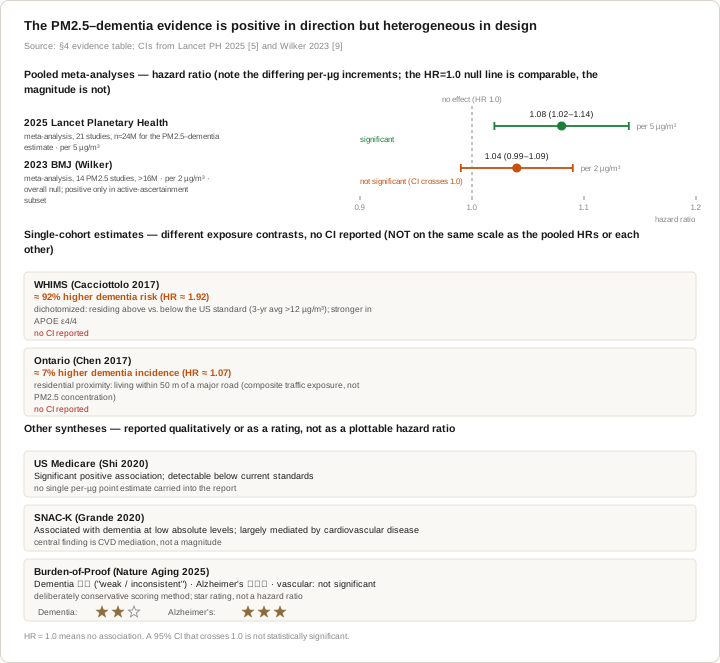
Women's Health Initiative Memory Study (WHIMS) — Cacciottolo et al., 2017 [1]. In a US-wide cohort of older women (aged 65–79, free of dementia at enrollment, >95% urban, across 48 states), residing where PM2.5 exceeded the US national ambient air quality standard (3-year average >12 µg/m³ — the then-applicable US annual standard, tightened to 9 µg/m³ in 2024) was associated with approximately an 81% higher risk of global cognitive decline and a 92% higher risk of all-cause dementia (high vs. low exposure), with stronger adverse effects among APOE ε4/4 carriers. (source · archived) Note this is a dichotomized above-vs-below-standard contrast (HR ≈ 1.92), not a per-µg estimate, and is therefore not directly comparable to — and is larger than — the per-increment meta-analytic hazard ratios below; it should not anchor the reader's sense of the typical effect size. The same paper reported that urban-derived nanoparticulate exposure increased cerebral β-amyloid in a transgenic mouse model, exacerbated by APOE ε4 — a rare instance of parallel human-epidemiological and experimental evidence in one study.
US Medicare cohort — Shi et al., 2020 [2]. Across the fee-for-service Medicare population (ages ≥65, contiguous US, 2000–2016), long-term PM2.5 exposure was significantly associated with an increased hazard of first hospital admission for Alzheimer's disease and related dementias (and for Parkinson's disease). Associations were detectable even at concentrations below current national standards — a finding directly relevant to whether a "safe" threshold exists. The administrative design gives enormous statistical power but limited individual-level covariates (e.g., no smoking data), a tradeoff discussed in §7.
Swedish National Study on Aging and Care, Kungsholmen (SNAC-K) — Grande et al., 2020 [3]. In ~2,927 Stockholm residents aged ≥60, long-term air-pollution exposure was associated with dementia risk despite comparatively low absolute exposure levels. The study's central and distinctive finding is that cardiovascular disease strongly shapes the association — heart failure and ischemic heart disease enhanced (modified) the relationship, while stroke was the key intermediate, statistically explaining roughly half (~49%) of pollution-related dementia cases — suggesting a substantial share of the PM-to-dementia link may operate through cardiovascular, and especially cerebrovascular, pathways. The last ~5 years of exposure were the most relevant. (source · archived)
Ontario population cohort — Chen et al., 2017 [4]. In ~2.2 million adults aged 55–85 with universal healthcare, living within 50 m of a major traffic road was associated with a ~7% higher incidence of dementia (HR ≈ 1.07) (source · archived), with a monotonic gradient by distance (attenuating to no association beyond ~300 m) and stronger associations among long-term urban residents. Traffic proximity is a composite exposure (PM2.5, ultrafine particles, NOₓ, noise), so this is best read as a traffic-related signal rather than a PM2.5-specific one. Notably, Chen's own analysis found that measured PM2.5 and NO₂ did not fully account for the proximity effect, and found no association for Parkinson's disease or multiple sclerosis — the latter relevant to the specificity question in §7. It is instructive as a real-world exposure gradient, but it is not concentration-based PM2.5 dose-response evidence.
Meta-analytic synthesis — positive on the largest pooling, but genuinely mixed. - The 2025 Lancet Planetary Health systematic review and meta-analysis [5] — the largest and most recent (21 studies for the PM2.5–dementia estimate, n ≈ 24 million) — reported a pooled adjusted hazard ratio of 1.08 per 5 µg/m³ (95% CI 1.02–1.14) — albeit with very high between-study heterogeneity (I²≈95%), so the pooled point estimate is best read as a central tendency across notably discordant studies rather than a precise common effect — with significant associations also for black carbon and NO₂. (source · archived) - A 2023 BMJ systematic review and meta-analysis (Wilker et al. [9]; 14 PM2.5 studies) found the overall PM2.5–dementia estimate to be null (HR 1.04 per 2 µg/m³, 95% CI 0.99–1.09) — the significant signal appeared only in the subset of studies using active case-ascertainment (HR 1.42 per 2 µg/m³, 95% CI 1.00–2.02), versus a null HR 1.03 (0.98–1.07) in passive-ascertainment studies. Because passive ascertainment systematically under-detects dementia (non-differential outcome misclassification biases toward the null), this is better read as a measurement-quality effect than as evidence of no association; the authors assessed the studies for risk of bias with the ROBINS-E tool and cautioned that the estimates should be interpreted accordingly. (source · archived) - A 2025 Nature Aging Burden-of-Proof meta-analysis [12], which applies a deliberately conservative scoring method, rated the PM2.5→all-cause-dementia association only two stars ("weak and/or inconsistent") (minimum ~14% excess risk), while rating the PM2.5→Alzheimer's-disease-specific association three stars (significant) and finding no significant association with vascular dementia.
Any per-10-µg/m³ figure quoted from these is an assumption-dependent extrapolation (linear, no-threshold) of per-5 or per-2 estimates, not a directly pooled value, and should be read as illustrative only. The honest summary: the direction is positive and, on the largest pooling, statistically significant; the magnitude and consistency are moderate and partly method-dependent (notably on how dementia cases are ascertained).
| Study | Design / population | Exposure metric | Reported association |
|---|---|---|---|
| Cacciottolo 2017 [1] | WHIMS cohort, ~3,600 older US women | Above vs. below US standard (>12 µg/m³, 3-yr avg; standard tightened to 9 in 2024) | ~92% higher dementia risk; stronger in APOE ε4/4 (source · archived) |
| Shi 2020 [2] | Medicare, contiguous US, ages ≥65 | Long-term annual PM2.5 | Higher hazard of first dementia hospitalization; effects below standards |
| Grande 2020 [3] | SNAC-K, ~2,927 Stockholm ≥60 | Modeled PM2.5, low absolute levels | Associated with dementia; stroke the key intermediate (~49%); HF/IHD effect-modifiers |
| Chen 2017 [4] | Ontario, ~2.2M adults 55–85 | Residential proximity to major roads | HR ≈ 1.07 at <50 m; distance gradient |
| 2025 Lancet PH [5] | Meta-analysis, 21 studies, ~24M | Long-term PM2.5 | Pooled HR 1.08 per 5 µg/m³ (95% CI 1.02–1.14; I²≈95%) (source · archived) |
| Wilker 2023 [9] | Meta-analysis, 14 PM2.5 studies | Long-term PM2.5 | Overall null (HR 1.04, 0.99–1.09); positive only in active-ascertainment subset |
| Nature Aging BoP 2025 [12] | Burden-of-Proof meta, 28 cohorts | Long-term PM2.5 | Dementia 2★ ("weak/inconsistent"); Alzheimer's 3★; vascular n.s. |
What is consistent: a dose-response gradient; biological plausibility from animal models; a temporal sequence in which exposure precedes diagnosis by years; geographic coherence across the North American and European cohorts reviewed here (no Asian cohort is cited, and the most recent 2024–25 cohorts post-date the meta-analyses relied on); and stronger associations in some APOE ε4 subgroups. What is contested is treated in §7–8.
5. Biological mechanisms
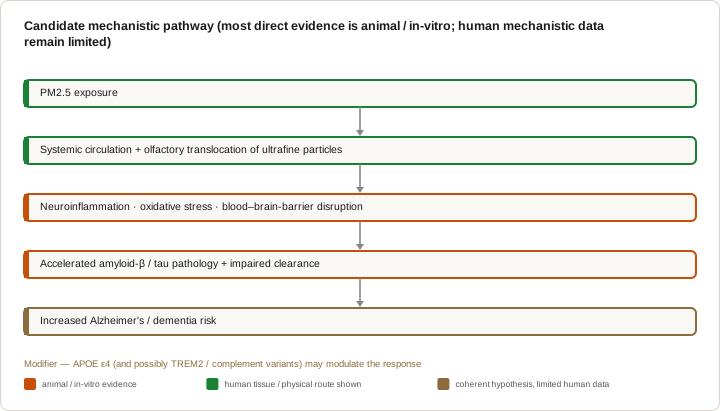
The proposed pathways are coherent and supported by experimental work, but most direct evidence is from animal or in-vitro systems; human mechanistic data remain limited. The statements below are mechanistic hypotheses with supporting animal/in-vitro evidence, not established human causation.
Neuroinflammation. PM exposure can activate microglia and inflammatory cascades — Toll-like-receptor-4 → MyD88 → NF-κB signaling, NLRP3-inflammasome activation generating IL-1β, and complement-mediated synaptic pruning. In APP/PS1 transgenic mice, particulate-matter exposure has been shown to exacerbate amyloid-β plaque deposition and gliosis, with elevated GFAP, Iba1, and CD68 markers (Sahu et al., 2021 [7] — a single APP/PS1 study, not independently replicated at this level of detail, so it should be read as a supporting data point, not a settled result). Neuroinflammation is among the more developed of the candidate mechanisms and dovetails with the cardiovascular-mediation finding in SNAC-K [3].
Oxidative stress. Transition metals carried by PM (iron, copper, manganese) can catalyze reactive-oxygen-species generation via Fenton/Haber-Weiss chemistry; downstream consequences in models include mitochondrial dysfunction, lipid peroxidation, and DNA damage.
Blood–brain-barrier disruption. In animal models, chronic exposure is associated with downregulation of tight-junction proteins (claudin-5, occludin), pericyte dysfunction, and increased barrier permeability — which would, in principle, admit both particles and peripheral inflammatory mediators.
Direct translocation. A fraction of ultrafine particles may reach the brain without crossing the systemic circulation. Controlled rodent inhalation studies demonstrated translocation of inhaled ultrafine particles to the brain via the olfactory route (Oberdörster et al., 2004 [10]). Consistent with a particle-deposition pathway, combustion-derived magnetite nanoparticles have been identified in human brain tissue (Maher et al., 2016 [11]), morphologically distinct from biologically-formed magnetite and consistent with an external, pollution-derived origin. These findings establish a plausible physical route but do not by themselves establish that such particles cause disease.
Proteinopathy. Animal evidence suggests PM exposure can accelerate amyloid-β aggregation and tau hyperphosphorylation and impair clearance (e.g., via glymphatic/vascular routes) — coherent with the WHIMS mouse data [1] and the APP/PS1 findings [7].
Gene–environment interaction. APOE ε4 — and possibly TREM2 and complement-pathway variants — may modulate the neuroinflammatory response to PM, consistent with the stronger associations observed in some ε4 subgroups across the epidemiology.
6. Particulate vectors beyond ambient PM2.5 (brief, in-scope extension)
Two adjacent particle questions bear directly on the PM2.5 story without being part of it. First, the ultrafine fraction (<100 nm) is mechanistically distinct from the broader PM2.5 mass: it has greater surface area per unit mass, higher metal/organic loading, and the olfactory translocation route demonstrated by Oberdörster [10] and physically corroborated by Maher's magnetite findings [11]. Much epidemiology measures PM2.5 mass and therefore under-resolves the ultrafine contribution. Second, microplastics have emerged as a candidate particle vector to the brain, raising a structurally parallel question (a non-biological particle crossing biological barriers and provoking inflammation). That literature is early and is the subject of a separate Holistic Quality research artifact; it is noted here only to mark the boundary, not absorbed into the PM2.5 evidence base. Conflating particle classes would weaken, not strengthen, the causal argument for any one of them.
7. Association versus causation
This is the analytical crux, and it warrants precision.
- Association is statistical dependence between exposure and outcome; it may reflect causation, confounding, or selection.
- Causation requires that PM exposure changes the probability of disease through a biological pathway — a counterfactual claim that observational association alone cannot establish.
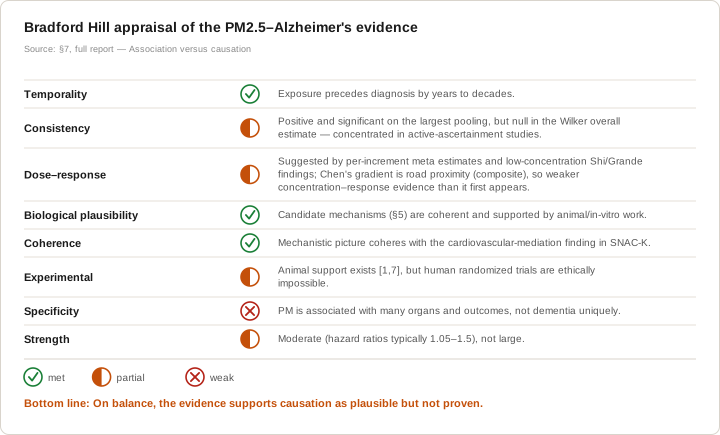
Bradford Hill appraisal. Temporality holds (exposure precedes diagnosis by years to decades). Consistency is partial (positive and significant on the largest pooling, but null in the Wilker overall estimate — concentrated in active-ascertainment studies). Dose-response is suggested by the per-increment meta-analytic estimates and the low-concentration findings of Shi [2] and Grande [3]; note Chen's gradient [4] is by road proximity (a composite exposure), not by PM2.5 concentration, so it is weaker concentration–response evidence than it first appears. Biological plausibility and coherence hold (the mechanisms in §5 align with the cardiovascular findings in §3). Experimental support exists in animals [1,7] but human trials are ethically impossible. Against a confident causal claim: specificity is weak (PM is associated with many organs and outcomes, not dementia uniquely), and the strength of association is moderate (hazard ratios typically 1.05–1.5), not large. On balance, the evidence supports causation as plausible but not proven.
Principal threats to a causal interpretation. (1) Unmeasured confounding, especially by socioeconomic position, which is associated with both higher pollution exposure and higher dementia risk through education, healthcare access, and chronic stress. (2) Exposure misclassification — outdoor ambient monitors as a proxy for personal exposure, given ~87% of time indoors [6]. (3) Survivor bias — healthier individuals survive to the age of dementia onset. (4) Detection/surveillance bias. (5) Reverse causation — preclinical disease may alter mobility and therefore exposure. Each cited cohort carries a study-specific version: WHIMS is restricted to older women [1]; the Medicare cohort lacks individual smoking data [2]; the Ontario road-proximity design cannot fully separate traffic noise from traffic PM [4]; SNAC-K's mediation analysis is itself model-dependent [3].
What would move the evidence toward causation.
- Policy-shock natural experiments — e.g., Clean Air Act non-attainment designations analyzed with difference-in-differences or related quasi-experimental designs, exploiting regulation as quasi-random exposure variation.
- Personal exposure monitoring with wearable PM2.5/ultrafine sensors, coupled with repeated blood-based Alzheimer's biomarkers (plasma p-tau217, GFAP, neurofilament light) — directly attacking the exposure-misclassification and human-mechanism gaps at once.
- Mendelian randomization, with explicit caveats about pleiotropy.
- Target-trial emulation on high-quality cohort data with careful confounder control and negative-control outcomes.
8. Evidence gaps
- Personal vs. ambient exposure — few studies measure what individuals actually breathe.
- Human mechanistic data — pathway evidence is largely animal/in-vitro; biomarker-linked human mechanism studies are scarce.
- PM speciation — which components (metals, organics, black carbon, ultrafines) carry the risk is unresolved.
- Critical windows — whether midlife exposure matters more than late-life is unclear.
- Gene–environment interaction beyond APOE is underexplored.
- Low-dose / threshold behavior — the shape of the dose-response at very low concentrations, and whether any safe threshold exists, is unsettled (and the Medicare below-standard findings [2] suggest risk may extend below current limits).
9. Priority research directions
- A nested case-control study within an existing Alzheimer's cohort (e.g., ADNI, NACC) deploying personal PM2.5/ultrafine monitors and collecting serial plasma biomarkers (GFAP, NfL, p-tau217).
- A policy-shock analysis exploiting air-quality regulation changes as quasi-random exposure variation.
- A gene–environment study within a large biobank testing APOE × PM interactions with pre-registered hypotheses.
- iPSC-derived neuron/microglia challenge experiments to probe human-cell-specific mechanisms (neuroinflammation, BBB models).
- A wildfire-smoke natural experiment linking acute high-exposure episodes to cognitive and biomarker outcomes.
10. Risk, equity, and policy relevance
Stated factually and without advocacy: pollution exposure is not evenly distributed, and the populations bearing the highest PM2.5 burdens frequently overlap with those facing other dementia risk factors (lower socioeconomic position, reduced healthcare access). This co-distribution is also precisely what makes the confounding problem in §7 hard — disentangling pollution's contribution from correlated disadvantage is both a scientific and an equity question. From a policy standpoint, the evidence is sufficient to treat air pollution as a plausible, modifiable contributor to dementia risk — which is the posture the 2020 Lancet Commission adopted in adding it to its modifiable-risk-factor model [8] — while remaining insufficient to support strong causal or quantitative attribution claims. The finding that associations persist below current standards [2] is relevant to any future review of exposure limits — but it carries a specific caveat that matters precisely because of its policy weight: the Medicare design lacks individual-level smoking and socioeconomic data and assigns exposure at the ZIP-code level, so residual confounding cannot be excluded, and the claim warrants replication with personal-exposure designs before it could responsibly inform a specific regulatory threshold. This report takes no position beyond what the cited evidence supports.
11. How to cite
Robey, L. (2026). Particulate Matter and Alzheimer's Disease: Associations, Mechanisms, and Missing Links (full evidence review, Version 1.0). Holistic Quality LLC. doi:10.5281/zenodo.21109168 · https://holisticquality.io/research/particulate-matter-and-alzheimers-full This full report is the citable version of this work. The version DOI (doi:10.5281/zenodo.21109168)) is frozen to this version (v1.0); the version-independent concept DOI (doi:10.5281/zenodo.21109167)) always resolves to the latest version.
12. Disclosures
Competing interests. The author, Levi Robey, is the founder and principal of Holistic Quality LLC, the commercial publisher of this report, which develops regulator-facing safety-data and compliance products in subject areas that include environmental and chemical exposure. (Updated 2026-09-25: an earlier version named a sibling property that has since been retired. The deposited PDF of this version still carries the original sentence.) These relationships constitute a financial and intellectual competing interest. To mitigate it, every quantitative claim and citation in this report was independently verified against its published source, the report states explicitly where the evidence is contested or where causation is not established, and the author retained full and sole editorial control — no commercial customer or third party reviewed or influenced the content. Readers are encouraged to verify the cited sources directly.
Funding. This work received no external, grant, or third-party funding. It was produced internally by Holistic Quality LLC (see Competing interests).
Data availability. This report is a synthesis of previously published, publicly available literature; no new datasets were generated or analyzed. All sources are listed with DOIs and can be retrieved directly.
License. This report is released under the Creative Commons Attribution 4.0 International license (CC BY 4.0, https://creativecommons.org/licenses/by/4.0/): you are free to share and adapt the material, including for commercial purposes, provided appropriate attribution is given.
Use of AI and authorship. This report was produced with AI-assisted literature review and drafting (Anthropic Claude), followed by human verification: every cited study was checked against its published source (journal, volume, issue, pages, and DOI confirmed; the characterized finding checked against the paper). AI tools are not authors and bear no responsibility for the content. The named author takes full responsibility for the entire work and all conclusions.
Author contributions. Levi Robey is the sole author, responsible for conceptualization, source selection, verification, analysis, drafting, and final approval.
ORCID. 0009-0005-6946-3569
Peer-review status. This is a self-published working paper and has not been peer-reviewed.
13. References
- Cacciottolo M, Wang X, Driscoll I, et al. Particulate air pollutants, APOE alleles and their contributions to cognitive impairment in older women and to amyloidogenesis in experimental models. Translational Psychiatry. 2017;7(1):e1022. doi:10.1038/tp.2016.280 · PMID 28140404 · archived
- Shi L, Wu X, Danesh Yazdi M, et al. Long-term effects of PM2.5 on neurological disorders in the American Medicare population: a longitudinal cohort study. The Lancet Planetary Health. 2020;4(12):e557–e565. doi:10.1016/S2542-5196(20)30227-8 · archived
- Grande G, Ljungman PLS, Eneroth K, Bellander T, Rizzuto D. Association between cardiovascular disease and long-term exposure to air pollution with the risk of dementia. JAMA Neurology. 2020;77(7):801–809. doi:10.1001/jamaneurol.2019.4914 · archived
- Chen H, Kwong JC, Copes R, et al. Living near major roads and the incidence of dementia, Parkinson's disease, and multiple sclerosis: a population-based cohort study. The Lancet. 2017;389(10070):718–726. doi:10.1016/S0140-6736(16)32399-6 · PMID 28063597 · archived
- Best Rogowski CB, Bredell C, Shi Y, et al. Long-term air pollution exposure and incident dementia: a systematic review and meta-analysis. The Lancet Planetary Health. 2025;9(7):101266. doi:10.1016/S2542-5196(25)00118-4 · PMID 40716448 (pooled adjusted HR ≈ 1.08 per 5 µg/m³ PM2.5; 21 studies, n ≈ 24 million for the PM2.5–dementia estimate). · archived
- Klepeis NE, Nelson WC, Ott WR, et al. The National Human Activity Pattern Survey (NHAPS): a resource for assessing exposure to environmental pollutants. Journal of Exposure Analysis and Environmental Epidemiology. 2001;11(3):231–252. doi:10.1038/sj.jea.7500165 · archived
- Sahu B, Mackos AR, Floden AM, Wold LE, Combs CK. Particulate matter exposure exacerbates amyloid-β plaque deposition and gliosis in APP/PS1 mice. Journal of Alzheimer's Disease. 2021;80(2):761–774. doi:10.3233/JAD-200919 · archived
- Livingston G, Huntley J, Sommerlad A, et al. Dementia prevention, intervention, and care: 2020 report of the Lancet Commission. The Lancet. 2020;396(10248):413–446. doi:10.1016/S0140-6736(20)30367-6 · archived
- Wilker EH, Osman M, Weisskopf MG. Ambient air pollution and clinical dementia: systematic review and meta-analysis. BMJ. 2023;381:e071620. doi:10.1136/bmj-2022-071620 · archived
- Oberdörster G, Sharp Z, Atudorei V, et al. Translocation of inhaled ultrafine particles to the brain. Inhalation Toxicology. 2004;16(6–7):437–445. doi:10.1080/08958370490439597 · archived
- Maher BA, Ahmed IAM, Karloukovski V, et al. Magnetite pollution nanoparticles in the human brain. Proceedings of the National Academy of Sciences USA. 2016;113(39):10797–10801. doi:10.1073/pnas.1605941113 · archived
- Huang X, Steinmetz J, Marsh EK, et al. A systematic review with a Burden of Proof meta-analysis of health effects of long-term ambient fine particulate matter (PM2.5) exposure on dementia. Nature Aging. 2025. doi:10.1038/s43587-025-00844-y · PMID 40119171 (28 cohorts; PM2.5→all-cause dementia rated two stars/"weak and inconsistent", PM2.5→Alzheimer's three stars, vascular dementia not significant). · archived
All 12 references were independently verified against their published records on 2026-05-29 (journal, volume, issue, pages, and DOI confirmed; the characterized finding checked against the source). Mechanistic statements in §5 reflect animal/in-vitro evidence unless a human study is named. Effect estimates are reported with their study context and are not directly comparable across differing exposure metrics.
Integrity — verify your PDF download with shasum -a 256; it should print:1c7cbcd8a9ad04c9294bd8cf88d57326ae03a11bde48aa096a14c77530d5f843
Related
- Research of Record — Holistic Quality's curated set of regulator-facing evidence briefs
- Citable repository — the published report text, figures, and citation manifest for all current deposits (CC BY 4.0, tag v1.5)
- Regulator's Bill of Rights — the methodology-transparency commitments this work reflects