This is the full evidence review — the citable version of this work, with the complete reference list and disclosures. Read the summary brief →
Anticholinergic Burden and Dementia: Associations, Mechanisms, and the Over-the-Counter Exposure Nobody Counts
An evidence synthesis · Holistic Quality LLC
Author: Levi Robey · Holistic Quality LLC · Contact: levi@holisticquality.io
Version: 1.0 · Published: 2026-07-07 · Last updated: 2026-07-07 · Web page corrected: 2026-09-25 (see Disclosures)
Document type: Working evidence synthesis (not peer-reviewed)
Diphenhydramine as exemplar · Environmental & pharmacological neurology
DOI: 10.5281/zenodo.21242588 (this version) · concept DOI 10.5281/zenodo.21242587 (always resolves to the latest version)
Revision note (2026-07-07): assigned the Zenodo version DOI 10.5281/zenodo.21242588 (concept DOI 10.5281/zenodo.21242587), archived the load-bearing reference sources as inert receipts under /receipts/sources/, and wired each citation to its archived snapshot. No change to the evidence, claims, or citations — the content review and §6 honesty review pass unchanged; this revision records the assigned DOIs, the CC BY 4.0 license, and the reference receipts only.
Disclaimer. Evidence synthesis, not a peer-reviewed publication. This is an AI-assisted, human-verified synthesis of the published scientific literature. It is a working white paper, not peer-reviewed, and not medical advice. Every effect size is traced to a cited primary source with a working DOI. Associations described are not assertions of causation unless a cited source establishes one.
How this was produced. We searched PubMed for primary longitudinal cohort and case-control studies reporting an adjusted effect estimate (hazard ratio, odds ratio, rate ratio) for anticholinergic drug exposure against an outcome of incident dementia, incident Alzheimer's disease, or longitudinal cognitive decline. A broad query ("anticholinergic burden AND dementia AND cohort/risk") returned 231 records; these were screened alongside targeted searches for named cohorts and national databases and for the first-generation-antihistamine class specifically. Reviews, meta-analyses, scale-validation papers, acute-delirium studies, cross-sectional-only designs, and studies of anticholinergics used to treat dementia were excluded. Twenty-two primary studies met inclusion. Every effect size quoted below was extracted from, and independently re-verified against, the source abstract on PubMed; every study is linked by DOI. Where studies disagree, we say so. This mirrors the methodology-transparency commitments made across the Holistic Quality regulator surface (see the Regulator's Bill of Rights): cite everything, say where the evidence is contested, and make the method legible.
Abstract
Medications with anticholinergic (antimuscarinic) activity are among the most widely used drugs in older adults, and a large body of observational research links cumulative exposure to them with an increased risk of dementia. This synthesis assembles 22 primary longitudinal cohort and case-control studies published between 2006 and 2026 — spanning national health databases in the UK, USA, Korea, Taiwan, Canada, France, the Netherlands, and China, and totalling several million participants — together with the meta-analyses and mechanistic literature that surround them.
The association is real, directionally consistent, and dose-responsive. In the largest and best-designed studies it survives long exposure-lag windows intended to rule out reverse causation, with adjusted hazard/odds ratios for the highest-exposure groups clustering around 1.1 to 1.5. It is coherent with a well-established mechanism: the cholinergic hypothesis of Alzheimer's disease.
Three honest limits constrain what this means. First, no randomized trial has ever tested a dementia endpoint; all of the dementia-specific evidence is observational, and confounding by indication — the fact that the conditions these drugs treat (depression, insomnia, incontinence, parkinsonism) are themselves linked to dementia — is a live and only partly resolvable alternative explanation. Second, the signal is not uniform across drug classes: it concentrates in anticholinergic antidepressants, bladder antimuscarinics, antiparkinson, and antipsychotic drugs, whereas the two best class-resolved studies do not find the first-generation antihistamine class independently significant. Third, this synthesis therefore cannot and does not claim that any single drug "causes" dementia.
Diphenhydramine — the prototypical first-generation antihistamine, and the most common strong anticholinergic available over the counter as a sleep aid and allergy remedy — is used here as the exemplar of an under-counted exposure, not as a drug with its own proven dementia hazard. The public-health point is narrow and defensible: cumulative anticholinergic burden is a plausibly modifiable risk factor, much of it is self-administered and invisible to prescribers, and minimizing unnecessary long-term use is prudent regardless of whether the association is ultimately causal.
1. Background: why anticholinergic drugs and the brain
Acetylcholine is a principal neurotransmitter of learning and memory. The cholinergic hypothesis of Alzheimer's disease — the observation that degeneration of cholinergic neurons in the basal forebrain tracks the cognitive decline of Alzheimer's, and the basis on which cholinesterase-inhibitor drugs (donepezil, rivastigmine, galantamine) were developed — makes the cholinergic system a natural place to look for pharmacological harm. Drugs that block muscarinic acetylcholine receptors do the pharmacological opposite of the drugs used to treat dementia.
That anticholinergic drugs cause acute, reversible cognitive impairment in older adults is not in dispute. Diphenhydramine in particular is a strong central antimuscarinic that readily crosses the blood-brain barrier; at ordinary doses it measurably impairs attention and psychomotor performance, and in overdose it produces a well-characterized anticholinergic delirium reversible with cholinesterase inhibitors (Fratta 2023) [27]. On the strength of this acute toxicity, expert reviews and the Beers Criteria for potentially inappropriate medication in older adults have long recommended that diphenhydramine be avoided in the elderly (Schroeck 2016) [26].
The open scientific question — the subject of this synthesis — is different and harder: does cumulative, long-term exposure to anticholinergic drugs raise the risk of permanent dementia, over and above the acute effect that resolves on discontinuation?
2. The epidemiology, cohort by cohort
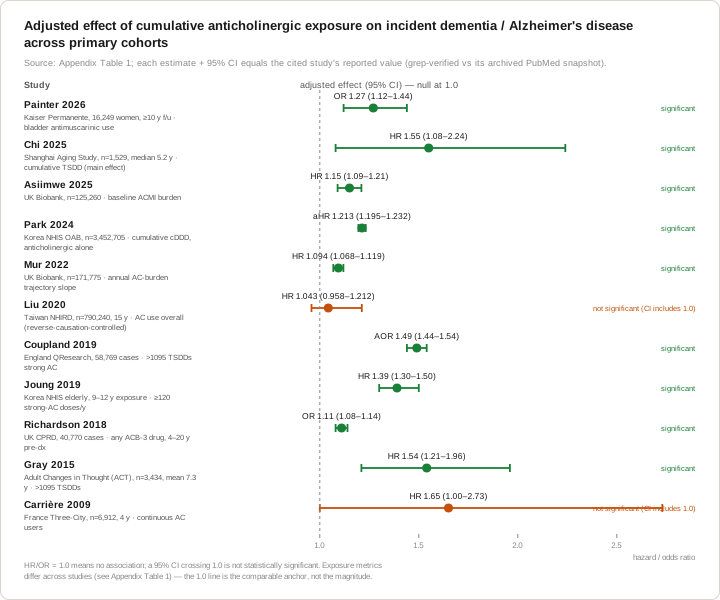
The primary evidence is summarized in Appendix Table 1 and discussed below, grouped by the strength of the design against the central threat of reverse causation (that early, undiagnosed dementia leads to the prescribing, rather than the reverse). The individual adjusted effect estimates across the 22 primary studies were assembled by design tier and direction of finding; no pooled summary estimate is reported, because the effect measures (HR / OR / IRR) and exposure metrics differ across studies and were not meta-analysed — each study's own reported estimate at its highest or stated exposure is used, against a reference of 1.0.
2.1 The landmark long-lag cohorts (the load-bearing evidence)
Three studies are load-bearing precisely because they were built to blunt reverse causation, and the association persisted anyway.
Gray 2015 — Adult Changes in Thought (ACT), USA. A prospective cohort of 3,434 adults aged ≥65 with no dementia at entry, using ten years of computerized pharmacy dispensing data to quantify cumulative exposure as total standardized daily doses (TSDDs). A clear dose-response was observed: the adjusted hazard ratio for the highest exposure category (>1095 TSDDs, roughly three-plus years of daily use) versus no use was 1.54 (95% CI 1.21–1.96) for dementia, with a similar pattern for Alzheimer's disease; lower exposure categories were not significant. Critically, the most recent 12 months of exposure were excluded to avoid counting drugs prescribed for prodromal symptoms. The most common contributing classes were tricyclic antidepressants, first-generation antihistamines, and bladder antimuscarinics (Gray 2015) [1].
Coupland 2019 — QResearch, England. A very large nested case-control study: 58,769 dementia cases and 225,574 matched controls, exposure measured as TSDDs of 56 strong anticholinergic drugs 1–11 years before diagnosis. The adjusted odds ratio rose to 1.49 (95% CI 1.44–1.54) in the highest exposure band, with a population-attributable fraction of about 10.3%. The association held when exposure was restricted to 3–13 years (OR 1.46) and 5–20 years (OR 1.44) before diagnosis — a strong reverse-causation stress test. By class, the significant signals were for anticholinergic antidepressants, antiparkinson, antipsychotic, bladder antimuscarinic, and antiepileptic drugs (Coupland 2019) [2].
Richardson 2018 — CPRD, UK. A case-control study of 40,770 dementia cases and 283,933 controls, exposure coded on the Anticholinergic Cognitive Burden (ACB) scale 4–20 years before diagnosis. The overall association for any ACB-3 (definite anticholinergic) drug was modest — OR 1.11 (95% CI 1.08–1.14) — but rose with cumulative exposure and, importantly, persisted for exposure 15–20 years before diagnosis. The signal was concentrated in antidepressant, urological, and antiparkinson drugs; gastrointestinal anticholinergics were not distinctively linked. The authors explicitly framed the interpretive fork: a class-specific causal effect, or drugs prescribed for the very earliest symptoms of dementia (Richardson 2018) [3].
2.2 Recent large cohorts and biobanks (2019–2026)
Newer data broadly reinforce the association while adding modern, genetically-informed cohorts:
- Asiimwe 2025 — UK Biobank + US All of Us. Baseline anticholinergic burden was associated with incident dementia in both cohorts: HR 1.15 (1.09–1.21) in UK Biobank (n=125,260) and 1.06 (1.04–1.09) in All of Us (n=92,047), with death modeled as a competing risk and the APOE ε4 effect replicated. The authors state plainly that causal inference is not possible (Asiimwe 2025) [16].
- Mur 2022 — UK Biobank. In 171,775 participants with linked prescription records, the slope of anticholinergic-burden trajectory predicted dementia (HR 1.094, 1.068–1.119), but the association held only for some classes (antidepressants, antiepileptics, antidiuretics) — and the estimate varied by which of 15 anticholinergic scales was used, underlining that "burden" is not a single well-defined exposure (Mur 2022) [15].
- Joung 2019 — Korean NHIS. Dose-dependent increase in incident Alzheimer's with cumulative strong-anticholinergic exposure over 9–12 years: HR 1.39 (1.30–1.50) for ≥120 doses/year, rising to 1.83 (1.56–2.14) in the "young-old" (aged 60–64 at baseline). The long required exposure window is itself a reverse-causation safeguard (Joung 2019) [14].
- Chi 2025 — Shanghai Aging Study. Cumulative burden (TSDD) was associated with incident dementia (HR 1.55, 1.08–2.24); the effect was markedly amplified in participants who also had high plasma neurofilament light (combined HR 6.34, 1.90–21.20), suggesting anticholinergic exposure interacts with underlying neurodegeneration rather than acting alone (Chi 2025) [20].
2.3 The overactive-bladder cluster — read with caution
A distinct group of studies compares anticholinergic bladder drugs against mirabegron, a non-anticholinergic β3-agonist used for the same condition, as an "active comparator":
- Park 2024 — Korean NHIS, the single largest study in this synthesis (N=3,452,705): anticholinergic monotherapy aHR 1.213 (1.195–1.232) and combination therapy 1.345 (1.323–1.366) versus mirabegron for new-onset dementia (Park 2024) [17].
- Matta 2021 — Ontario (ICES), nested case-control, 11,392 cases: solifenacin OR 1.24 (1.08–1.43) and darifenacin 1.30 (1.08–1.56) versus mirabegron — but no association for oxybutynin or trospium, which the authors attribute to protopathic bias (Matta 2021) [18].
- Painter 2026 — Kaiser Permanente, 16,249 women with ≥10 years' follow-up: bladder antimuscarinic use OR 1.27 (1.12–1.44) for incident dementia/cognitive impairment (Painter 2026) [19].
A caveat that must travel with this cluster: the active-comparator design is not as clean as it appears, because in Park 2024 mirabegron — the supposedly inert reference — itself showed a dose-dependent dementia association (aHR ~1.06), leading the authors to conclude that "no drugs could be concluded as safe." The most parsimonious reading is that overactive bladder and lower-urinary-tract dysfunction are partly prodromal markers of neurodegeneration, so some of the signal in every bladder-drug study reflects the underlying condition, not the drug's pharmacology. This cluster corroborates the class pattern but should not be read as clean causal evidence.
2.4 The mixed, attenuating, and null studies (given equal weight)
Honesty requires foregrounding the studies that qualify or contradict the association:
- Liu 2020 — Taiwan (N=790,240), one of the largest and most rigorously reverse-causation-controlled studies (dementia diagnoses in the first 2 and 4 years excluded), found no overall association (HR 1.043, 0.958–1.212); risk rose only at extreme burden (ACB ≥5) and very long duration (Liu 2020) [9].
- Hafdi 2019 — preDIVA, Netherlands. Persistent high burden gave HR 1.95 (1.13–3.38), but this collapsed to 0.42 (0.06–3.01) once antidepressant and antipsychotic users were removed — the authors concluded the signal reflected confounding by indication (Hafdi 2019) [7].
- Andre / MAPT 2018 — France. No association with cognitive decline on any of four anticholinergic scales (Andre 2018) [8].
- Ancelin 2006 — France. A strong cross-sectional association with mild cognitive impairment (OR 5.12) but no difference in incident dementia at 8 years (Ancelin 2006) [5].
- Carrière 2009 — Three-City, France. Incident dementia was raised in continuous users (HR 1.65, 1.00–2.73) but not in those who discontinued (1.28, 0.59–2.76) — the discontinuation contrast is among the more encouraging findings for the "modifiable" framing (Carrière 2009) [4].
- Grossi 2019 — MRC CFAS, UK. Positive for high-potency (ACB-3) recurrent use, especially in the cognitively intact, but null for lower-potency (ACB 1–2) drugs (Grossi 2019) [6].
Additional positive primary studies include Hsu 2017 and Hsu 2021 (Taiwan; large but with no described lag window; some subgroup odds ratios are very high and are best read as exploratory) [10] [11], Wu 2017 (short-term decline) [12], Risacher 2016 (ADNI, imaging and decline in cognitively normal adults) [13], and Franklin 2026 (NACC; anticholinergic burden associated with incident mild behavioral impairment, a dementia prodrome — HR 1.07, 1.02–1.14; a softer endpoint than dementia) [21]. Pham Nguyen 2025 found no overall association with Parkinson's-disease dementia [22].
2.5 What the meta-analyses conclude
Pooled analyses point the same way while flagging low certainty. Zheng 2021 (14 studies, ~1.56 million subjects) found anticholinergic use associated with all-cause dementia and Alzheimer's with a dose-dependent relationship [23]. The Taylor-Rowan 2022 Cochrane review (18 studies, 102,684 subjects) — restricted to people with existing cognitive impairment — rated the evidence for accelerated cognitive decline as low to very-low certainty, with the clearest pooled signal being for mortality rather than cognition [24]. A 2026 systematic review of bladder antimuscarinics in women found no cognitive effect in short randomized trials but increased dementia risk in multi-year cohorts (pooled OR 1.33 / HR 1.24) — the recurring pattern of null short RCTs alongside positive long observational data (Maguire 2026) [25].
Appendix Table 1 (below) is the full 22-study epidemiology table with verbatim effect sizes.
3. Mechanism and its evidentiary status
The mechanistic case is plausible and coherent, though most of it is indirect:
- Muscarinic receptor blockade in a system already central to memory (well-established pharmacology; strong plausibility).
- The cholinergic deficit of Alzheimer's disease provides a specific reason chronic antimuscarinic exposure could accelerate or unmask decline (well-established as the basis of cholinesterase-inhibitor therapy; the causal link from drug exposure to neurodegeneration is inferred, not demonstrated).
- Neuroimaging correlates: Risacher 2016 reported that cognitively normal older adults on anticholinergic medication had reduced brain glucose metabolism, greater atrophy, and worse memory and executive performance [13] — consistent with a biological effect, but cross-sectional imaging cannot establish direction.
- Biomarker interaction: Chi 2025's finding that the association is amplified in people with high neurofilament light suggests the drug and underlying neurodegeneration act together [20].
A key distinction the mechanism does not yet resolve: whether chronic anticholinergic exposure produces durable neurodegeneration, or whether it chronically masks cognitive reserve in a way that is diagnosed as dementia but is partly pharmacological. The discontinuation findings (Carrière 2009) hint at at least partial reversibility.
4. Causal appraisal (Bradford Hill)
Within the three studies that reported effect estimates by cumulative-exposure band (Gray, Coupland, Joung), risk rose monotonically with exposure. A dose–response gradient is the strongest single Bradford Hill criterion the observational evidence supplies here.
- Strength of association: modest in the best studies — adjusted HR/OR roughly 1.1–1.5 at highest exposure. (Larger subgroup estimates exist but are not the headline.)
- Consistency: good at the level of total burden and specific classes across many countries and data systems; imperfect — at least one very large study (Liu 2020) is null overall.
- Dose-response: repeatedly demonstrated (Gray, Coupland, Joung, Park, Zheng). One of the stronger Hill criteria here.
- Temporality: partially satisfied. The strongest designs push exposure years to decades before diagnosis (Gray, Coupland, Richardson, Joung), which argues against pure reverse causation — but does not eliminate confounding by indication.
- Plausibility / coherence: high, via the cholinergic hypothesis.
- Experiment: not met. No randomized trial has tested a dementia endpoint; short cognitive RCTs are null.
- Analogy / specificity: weak — the effect is not specific to one drug or class, and the class pattern (below) complicates a simple "anticholinergic → dementia" story.
Verdict: a consistent, dose-responsive association that is biologically plausible and partly robust to reverse causation, but for which causality remains unproven. Confounding by indication is the most important unresolved alternative explanation.
5. The honest complication: confounding by indication and the class pattern
Two facts sit at the center of an honest reading.
First, the conditions treated are themselves tied to dementia. Depression, insomnia, urinary urgency, and parkinsonian symptoms can be early manifestations of — or independent risk factors for — the neurodegenerative process that later presents as dementia. When Hafdi 2019 removed psychotropic users, the association vanished. When Matta 2021 examined individual bladder drugs, the pattern (oxybutynin and trospium null; solifenacin and darifenacin positive) did not track cleanly with anticholinergic potency, which the authors read as protopathic bias. When Park 2024's non-anticholinergic comparator itself predicted dementia, it suggested the indication carries risk. None of this proves the association is entirely confounded — the long-lag survival in Gray, Coupland, and Richardson argues it is not — but it means the true causal effect, if any, is smaller than the crude association.
Second, the class pattern cuts against a naive "diphenhydramine causes dementia" claim. Across the two best class-resolved studies (Coupland 2019, Richardson 2018), the long-term signal concentrates in anticholinergic antidepressants, bladder antimuscarinics, antiparkinson, and antipsychotic drugs — and the first-generation antihistamine and gastrointestinal classes are not independently significant. Gray 2015 counted antihistamines among the top contributors to total burden, which is the strongest indirect support for a diphenhydramine signal, but no class-resolved study since has isolated the antihistamine class as an independent driver. Any claim about diphenhydramine specifically must rest on its membership in the total-burden signal and its established acute toxicity — not on drug-specific long-term dementia evidence, which does not exist. Concretely: the class-specific adjusted odds ratios (Coupland 2019, highest exposure) concentrate in the psychotropic and urological classes, while the antihistamine class that includes diphenhydramine — and the gastrointestinal class — were reported as not independently significant (concordant with Richardson 2018). This is the empirical basis for framing diphenhydramine as an exemplar of total anticholinergic burden rather than a proven independent cause of dementia.
6. The over-the-counter angle: the exposure nobody counts
Almost the entire dementia-risk literature is built on prescription data — pharmacy dispensing records, insurance claims, primary-care prescribing databases. Diphenhydramine's distinctive feature is that its largest use is not captured there: it is sold over the counter as the active ingredient in ubiquitous sleep aids (ZzzQuil, Unisom SleepGels, Tylenol PM, Advil PM) and allergy products (Benadryl). A person taking a nightly OTC sleep aid for years accrues exactly the kind of cumulative anticholinergic burden the prescription studies associate with risk — while remaining invisible to every data system used to study it.
This is the report's genuinely under-covered contribution, and it is defensible without overclaiming causation:
- Diphenhydramine is a strong anticholinergic (undisputed).
- Cumulative anticholinergic burden is associated with dementia risk in dose-responsive fashion (this synthesis).
- Chronic OTC sleep-aid and allergy use is a large, unmonitored source of exactly that burden (exposure fact).
- Guidance already recommends minimizing anticholinergic exposure in older adults on the basis of acute harm and the Beers Criteria (established).
The prudent public-health conclusion follows from (1)–(4) even if the long-term dementia association is ultimately non-causal: unnecessary chronic anticholinergic exposure is worth minimizing, and consumers self-medicating for sleep or allergies generally do not know that the "PM" in their nightly tablet is a strong anticholinergic at all.
7. Limitations
- All dementia-endpoint evidence is observational. No RCT has tested it, and none easily could.
- Confounding by indication is pervasive and only partly addressable (§5).
- "Anticholinergic burden" is not one exposure. 15+ competing scales with poor inter-agreement; effect sizes shift with scale choice (Mur 2022).
- Outcomes are heterogeneous — all-cause dementia, Alzheimer's, MCI, mild behavioral impairment, and cognitive-decline slopes are not interchangeable; softer endpoints (Franklin, Ancelin, Risacher) should carry less weight.
- Diphenhydramine is not studied in isolation; its role is inferred from class membership.
- The largest OTC exposure is unmeasured in nearly all source studies — a gap that runs in the direction of under-counting exposure, which would bias observed associations toward the null but also means real-world burden is higher than the prescription data capture.
- Publication and surveillance effects are possible; positive findings in this area attract attention.
8. Conclusion
The weight of evidence — 22 primary studies across five continents of data, dose-responsive, coherent with a specific mechanism, and robust to long reverse-causation lag windows in the strongest designs — supports a real association between cumulative anticholinergic burden and dementia risk. It does not establish causation, and the association is neither uniform across drug classes nor free of the confounding-by-indication problem that shadows all pharmaco-epidemiology of this kind.
For diphenhydramine specifically, the honest statement is narrow and firm: it is the exemplar of a strong anticholinergic whose largest use is unmonitored and over-the-counter; it contributes to exactly the burden the literature associates with risk; its acute cognitive harm and "avoid in older adults" status are already established; and minimizing unnecessary chronic use is prudent on those grounds alone, independent of whether the long-term dementia association proves causal. What the evidence does not support — and what this document does not claim — is that diphenhydramine has been shown to cause dementia.
Key gaps
- No experimental test on the dementia endpoint. No randomized or quasi-experimental study has tested whether reducing anticholinergic burden lowers incident dementia; deprescribing trials to date measure short-term cognition, not adjudicated incident dementia.
- Diphenhydramine is not studied in isolation. The single largest over-the-counter anticholinergic exposure has no standalone long-term incident-dementia study; its contribution is inferred from class membership, not measured directly.
- "Anticholinergic burden" is not one exposure. Fifteen-plus competing scales with poor inter-agreement mean effect sizes shift with scale choice (Mur 2022); there is no harmonized, pharmacologically anchored metric.
- Over-the-counter exposure is unmeasured. Nearly all source cohorts use prescription-only data, so the largest real-world source of burden is systematically under-counted — a gap that biases observed associations toward the null while meaning true exposure is higher than the data capture.
- Confounding by indication is only partly addressable. The active-comparator (mirabegron) cluster shows the indication itself — overactive bladder — may be a prodromal marker of neurodegeneration, so no purely observational design can fully separate drug from indication (§5).
Priority research directions
- A deprescribing trial powered for incident dementia, or a target-trial emulation using linked pharmacy plus over-the-counter purchase data, to test the causal question the observational literature cannot.
- Cohorts that capture OTC antihistamine and sleep-aid purchases (pharmacy-sales or loyalty-card linkage) so the unmonitored exposure is measured directly rather than inferred.
- Harmonization of anticholinergic-burden scales against a common receptor-affinity-weighted pharmacological reference, with pre-registered analysis, so effect sizes stop depending on scale choice.
- Biomarker-stratified designs (e.g. plasma neurofilament light, as in Chi 2025) to distinguish a drug effect from underlying neurodegeneration.
- Active-comparator designs beyond the bladder class to further reduce confounding by indication.
These directions would sharpen, not overturn, the central reading of the current evidence: a consistent, dose-responsive association between cumulative anticholinergic burden and dementia risk that is not established as causal and is shadowed throughout by confounding by indication.
How to cite
Robey, L. (2026). Anticholinergic Burden and Dementia: Associations, Mechanisms, and the Over-the-Counter Exposure Nobody Counts (full evidence synthesis, Version 1.0). Holistic Quality LLC. doi:10.5281/zenodo.21242588 · https://holisticquality.io/research/anticholinergic-burden-and-dementia-full This full report is the citable version of this work. The version DOI (doi:10.5281/zenodo.21242588)) is frozen to this version (v1.0); the version-independent concept DOI (doi:10.5281/zenodo.21242587)) always resolves to the latest version.
A summary of this work is published at holisticquality.io/research/anticholinergic-burden-and-dementia.
References
- Gray SL, Anderson ML, Dublin S, Hanlon JT, Hubbard R, Walker R, Yu O, Crane PK, et al. Cumulative use of strong anticholinergics and incident dementia: a prospective cohort study. JAMA Intern Med. 2015;175(3):401–407. doi:10.1001/jamainternmed.2014.7663 · PMID 25621434 · PMC4358759 · source · archived
- Coupland CAC, Hill T, Dening T, Morriss R, Moore M, Hippisley-Cox J. Anticholinergic Drug Exposure and the Risk of Dementia: A Nested Case-Control Study. JAMA Intern Med. 2019;179(8):1084–1093. doi:10.1001/jamainternmed.2019.0677 · PMID 31233095 · PMC6593623 · source · archived
- Richardson K, Fox C, Maidment I, Steel N, Loke YK, Arthur A, Myint PK, Grossi CM, et al. Anticholinergic drugs and risk of dementia: case-control study. BMJ. 2018;361:k1315. doi:10.1136/bmj.k1315 · PMID 29695481 · PMC5915701 · source · archived
- Carrière I, Fourrier-Reglat A, Dartigues JF, Rouaud O, Pasquier F, Ritchie K, Ancelin ML. Drugs with anticholinergic properties, cognitive decline, and dementia in an elderly general population: the 3-city study. Arch Intern Med. 2009;169(14):1317–1324. doi:10.1001/archinternmed.2009.229 · PMID 19636034 · PMC2933398 · source · archived
- Ancelin ML, Artero S, Portet F, Dupuy AM, Touchon J, Ritchie K. Non-degenerative mild cognitive impairment in elderly people and use of anticholinergic drugs: longitudinal cohort study. BMJ. 2006;332(7539):455–459. doi:10.1136/bmj.38740.439664.DE · PMID 16452102 · PMC1382539 · source · archived
- Grossi CM, Richardson K, Fox C, Maidment I, Steel N, Loke YK, Arthur A, Myint PK, et al. Anticholinergic and benzodiazepine medication use and risk of incident dementia: a UK cohort study. BMC Geriatr. 2019;19(1):276. doi:10.1186/s12877-019-1280-2 · PMID 31638906 · PMC6802337 · source · archived
- Hafdi M, Hoevenaar-Blom MP, Beishuizen CRL, Moll van Charante EP, Richard E, van Gool WA. Association of Benzodiazepine and Anticholinergic Drug Usage With Incident Dementia: A Prospective Cohort Study of Community-Dwelling Older Adults. J Am Med Dir Assoc. 2020;21(2):188–193.e3. doi:10.1016/j.jamda.2019.05.010 · PMID 31300339 · source · archived
- Andre L, Gallini A, Montastruc F, Coley N, Montastruc JL, Vellas B, Andrieu S, Gardette V, et al. Anticholinergic exposure and cognitive decline in older adults: effect of anticholinergic exposure definitions in a 3-year analysis of the multidomain Alzheimer preventive trial (MAPT) study. Br J Clin Pharmacol. 2019;85(1):71–99. doi:10.1111/bcp.13734 · PMID 30098049 · PMC6303211 · source · archived
- Liu YP, Chien WC, Chung CH, Chang HA, Kao YC, Tzeng NS. Are Anticholinergic Medications Associated With Increased Risk of Dementia and Behavioral and Psychological Symptoms of Dementia? A Nationwide 15-Year Follow-Up Cohort Study in Taiwan. Front Pharmacol. 2020;11:30. doi:10.3389/fphar.2020.00030 · PMID 32116707 · PMC7033580 · source · archived
- Hsu WH, Wen YW, Chen LK, Hsiao FY. Comparative Associations Between Measures of Anti-cholinergic Burden and Adverse Clinical Outcomes. Ann Fam Med. 2017;15(6):561–569. doi:10.1370/afm.2131 · PMID 29133497 · PMC5683870 · source · archived
- Hsu WH, Huang ST, Lu WH, Wen YW, Chen LK, Hsiao FY. Impact of Multiple Prescriptions With Anticholinergic Properties on Adverse Clinical Outcomes in the Elderly: A Longitudinal Cohort Study in Taiwan. Clin Pharmacol Ther. 2021;110(4):966–974. doi:10.1002/cpt.2217 · PMID 33626177 · source · archived
- Wu YH, Wang CJ, Hung CH, Chen LY, Lin MH, Wang PN, Chen LK. Association between using medications with anticholinergic properties and short-term cognitive decline among older men: A retrospective cohort study in Taiwan. Geriatr Gerontol Int. 2017;17 Suppl 1:57–64. doi:10.1111/ggi.13032 · PMID 28436193 · source · archived
- Risacher SL, McDonald BC, Tallman EF, West JD, Farlow MR, Unverzagt FW, Gao S, Boustani M, et al. Association Between Anticholinergic Medication Use and Cognition, Brain Metabolism, and Brain Atrophy in Cognitively Normal Older Adults. JAMA Neurol. 2016;73(6):721–732. doi:10.1001/jamaneurol.2016.0580 · PMID 27088965 · PMC5029278 · source · archived
- Joung KI, Kim S, Cho YH, Cho SI. Association of Anticholinergic Use with Incidence of Alzheimer's Disease: Population-based Cohort Study. Sci Rep. 2019;9(1):6802. doi:10.1038/s41598-019-43066-0 · PMID 31043628 · PMC6494800 · source · archived
- Mur J, Russ TC, Cox SR, Marioni RE, Muniz-Terrera G. Association between anticholinergic burden and dementia in UK Biobank. Alzheimers Dement (N Y). 2022;8(1):e12290. doi:10.1002/trc2.12290 · PMID 35434252 · PMC9005668 · source · archived
- Asiimwe IG, Best K, Sofat R, Todd OM, Walker L, Jorgensen AL, Clegg A, Pirmohamed M. The anticholinergic medication index and dementia risk: evidence from the UK Biobank and All of Us research program. Age Ageing. 2025;54(11). doi:10.1093/ageing/afaf326 · PMID 41206104 · PMC12596250 · source · archived
- Park JS, Choi SB, Jang WS, Kim J, Ham WS. Risks of Dementia After Treatment with an Anticholinergic, Beta-3 Agonist, or Combination of Both for an Overactive Bladder: A Korean National Cohort Study. Eur Urol Focus. 2024;10(2):306–314. doi:10.1016/j.euf.2024.02.002 · PMID 38388215 · source · archived
- Matta R, Gomes T, Juurlink D, Jarvi K, Herschorn S, Nam RK. Receipt of Overactive Bladder Drugs and Incident Dementia: A Population-based Case-control Study. Eur Urol Focus. 2022;8(5):1433–1440. doi:10.1016/j.euf.2021.10.009 · PMID 34742663 · source · archived
- Painter CE, Stram D, Velasco VS, Cheng W, Korn A, Ramm O. Antimuscarinic Use and Dementia Incidence in Women With Overactive Bladder. Urogynecology. 2026;32(6):652–659. doi:10.1097/SPV.0000000000001708 · PMID 41329613 · source · archived
- Chi D, Liang X, Xiao Z, Zhou X, Zhao Q, Wang B, Ding D. Joint Effects of Anticholinergic Burden and Neurofilament Light on Dementia Risk: The Shanghai Aging Study. CNS Neurosci Ther. 2025;31(12):e70691. doi:10.1002/cns.70691 · PMID 41373116 · PMC12695687 · source · archived
- Franklin CE, Rosenberg PB, Lyketsos CG, Ismail Z, Leoutsakos JM. The Impact of Anticholinergic Burden on the Development of Mild Behavioral Impairment. Am J Geriatr Psychiatry. 2026;34(8):1019–1030. doi:10.1016/j.jagp.2026.05.008 · PMID 42242938 · source · archived
- Pham Nguyen TP, Thibault D, Gray SL, Weintraub D, Willis AW. Impact of Anticholinergic Burden and Clinical-Demographic Characteristics on Incident Dementia in Parkinson Disease. J Geriatr Psychiatry Neurol. 2025;38(4):254–263. doi:10.1177/08919887241313376 · PMID 39773244 · PMC12022375 · source · archived
- Zheng YB, Shi L, Zhu XM, Bao YP, Bai LJ, Li JQ, Liu JJ, Han Y, et al. Anticholinergic drugs and the risk of dementia: A systematic review and meta-analysis. Neurosci Biobehav Rev. 2021;127:296–306. doi:10.1016/j.neubiorev.2021.04.031 · PMID 33933505 · source · archived
- Taylor-Rowan M, Kraia O, Kolliopoulou C, Noel-Storr AH, Alharthi AA, Cross AJ, Stewart C, Myint PK, et al. Anticholinergic burden for prediction of cognitive decline or neuropsychiatric symptoms in older adults with mild cognitive impairment or dementia. Cochrane Database Syst Rev. 2022;8(8):CD015196. doi:10.1002/14651858.CD015196.pub2 · PMID 35994403 · PMC9394684 · source · archived
- Maguire T, Marr C, Barry H, Abdel-Fattah M, McGuinness B. Antimuscarinic medication used for the treatment of overactive bladder in women and the risk of cognitive decline, cardiovascular disease and mortality-a systematic review. Age Ageing. 2026;55(2). doi:10.1093/ageing/afag027 · PMID 41686541 · source · archived
- Schroeck JL, Ford J, Conway EL, Kurtzhalts KE, Gee ME, Vollmer KA, Mergenhagen KA. Review of Safety and Efficacy of Sleep Medicines in Older Adults. Clin Ther. 2016;38(11):2340–2372. doi:10.1016/j.clinthera.2016.09.010 · PMID 27751669 · source · archived
- Fratta KA, Ginder M, Haggerty DA. Oral and Transdermal Rivastigmine for the Treatment of Anticholinergic Delirium: A Case Report. J Emerg Med. 2023;65(4):e366–e368. doi:10.1016/j.jemermed.2023.06.008 · PMID 37716903 · source · archived
All citations were independently verified against their published sources on PubMed; associations are not assertions of causation.
Disclosures
Competing interests. The author is the founder and principal of Holistic Quality LLC, the commercial publisher of this report, which develops regulator-facing safety-data and compliance products in areas that include pharmacological and environmental exposure. (Updated 2026-09-25: an earlier version named a sibling property that has since been retired. The deposited PDF of this version still carries the original sentence.) These constitute a competing interest. Mitigation: every effect size and citation was independently source-verified against its published PubMed record, the limits of the evidence — and the explicit boundary between association and causation — are stated throughout, and the author retained sole editorial control.
Funding: none (self-funded). Data availability: synthesis of published literature; no new data were generated. AI use: AI-assisted review and drafting, human-verified; the named author is responsible for all content. Peer-review status: self-published working paper; not peer-reviewed. ORCID: 0009-0005-6946-3569.
Sensitive-topic note. Dementia is a distressing subject. This document is about population-level medication risk, not individual prognosis, and is not a basis for self-diagnosis. Consult a clinician before starting or stopping any medication.
License. This report is released under the Creative Commons Attribution 4.0 International license (CC BY 4.0, https://creativecommons.org/licenses/by/4.0/): you are free to share and adapt the material, including for commercial purposes, provided appropriate attribution is given.
Appendix Table 1
Primary studies of anticholinergic drug exposure and incident dementia or long-term cognitive decline (n = 22)
Scope and inclusion. Primary longitudinal cohort and (nested) case-control studies reporting an adjusted effect estimate (HR / OR / aHR / IRR) for anticholinergic drug exposure against incident dementia, incident Alzheimer's disease, or longitudinal cognitive decline / MCI-to-dementia progression. Reviews, meta-analyses, anticholinergic-burden scale-validation papers, acute-delirium studies, cross-sectional-only designs, and studies of anticholinergics used to treat dementia were excluded. Evidence identified via PubMed (broad "anticholinergic burden AND dementia AND cohort/risk" query, 231 records, plus targeted named-cohort and antihistamine-class searches). Every effect estimate below was extracted from and independently re-verified against the source abstract on PubMed. Studies are ordered newest → oldest; the § column cross-references the section of the main report in which each study is discussed.
Section-code key (§): L = landmark long-lag design (report §2.1) · C = large cohort / biobank (§2.2) · B = overactive-bladder active-comparator cluster (§2.3) · O = other, mixed, attenuating, or null (§2.4). Signal key: + positive · ± mixed / conditional · 0 null.
| # | Study (year) | § | Country · data source | Design | N | Exposure metric | Outcome | Adjusted effect at highest / stated exposure (95% CI) | Signal |
|---|---|---|---|---|---|---|---|---|---|
| 1 | Asiimwe (2025) | C | UK · US — UK Biobank + All of Us | Prospective cohort ×2, competing-risk | 125,260 · 92,047 | Baseline ACMI burden | Incident dementia | HR 1.15 (1.09–1.21) UKB; 1.06 (1.04–1.09) AoU | + |
| 2 | Painter (2026) ᵃ | B | USA — Kaiser Permanente N. California | Retrospective cohort, ≥10 y f/u | 16,249 women | Bladder antimuscarinic use / burden | Incident dementia/cognitive impairment | OR 1.27 (1.12–1.44) | + |
| 3 | Franklin (2026) ᵇ | O | USA — NACC | Cohort, cognitively unimpaired, time-varying | 4,865 | Time-varying ACB | Incident mild behavioral impairment (prodrome) | HR 1.07 (1.02–1.14) | + |
| 4 | Chi (2025) ᶜ | C | China — Shanghai Aging Study | Prospective cohort, median 5.2 y | 1,529 | Cumulative ACB + TSDD (1 y pre-baseline) | Incident dementia | HR 1.55 (1.08–2.24) TSDD; 6.34 (1.90–21.20) high TSDD + high NfL | + |
| 5 | Pham Nguyen (2025) | O | USA — UPenn Parkinson's cohort | Prospective, time-varying ACB | PD patients | Time-varying ACB | Incident Parkinson's-disease dementia | Not associated overall (no significant HR) | 0 |
| 6 | Park (2024) ᵈ | B | Korea — NHIS (overactive bladder) | Retrospective cohort, active comparator | 3,452,705 | Cumulative cDDD vs mirabegron | New-onset dementia | aHR 1.213 (1.195–1.232) AC alone; 1.345 (1.323–1.366) combination | + |
| 7 | Mur (2022) ᵉ | C | UK — UK Biobank (linked GP Rx) | Prospective cohort | 171,775 | Annual AC-burden trajectory (15 scales) | Incident dementia | HR 1.094 (1.068–1.119) (trajectory slope) | + |
| 8 | Taylor-Rowan — see report §2.5 meta-analysis | — | — | (Cochrane meta-analysis — not a primary study; listed in main report) | — | — | — | — | — |
| 9 | Matta (2021) ᵈ | B | Canada — Ontario (ICES) | Nested case-control, active comparator | 11,392 cases · 29,881 controls | Specific OAB antimuscarinic vs mirabegron (6–12 mo) | Incident dementia / AD | Solifenacin OR 1.24 (1.08–1.43); darifenacin 1.30 (1.08–1.56); oxybutynin & trospium null | ± |
| 10 | Liu (2020) ᶠ | O | Taiwan — NHIRD | Retrospective matched cohort, time-dependent | 790,240 | AC use; ACB bands; duration | Incident dementia (15 y) | HR 1.043 (0.958–1.212) overall (NS); ↑ only at ACB ≥5 & ≥1460 days | 0 |
| 11 | Coupland (2019) | L | England — QResearch | Nested case-control | 58,769 cases · 225,574 controls | TSDDs of 56 strong AC drugs (1–11 y pre-index) | Incident dementia | AOR 1.49 (1.44–1.54) >1095 TSDDs; held 5–20 y lag; PAF ≈10.3% | + |
| 12 | Grossi (2019) | O | UK — MRC CFAS | Prospective cohort (~8 y) | 8,216 | ACB-3 vs ACB 1–2; ever / recurrent | Incident dementia | Recurrent ACB-3 IRR 1.68 (1.00–2.82); ACB-3 in MMSE>25 2.28 (1.32–3.92); ACB 1–2 0.89 (0.68–1.17) | ± |
| 13 | Hafdi (2019) ᵍ | O | Netherlands — preDIVA | Prospective cohort (median 6.7 y) | 3,526 | Persistent ACB (baseline + 2 y) | Incident dementia | Persistent HR 1.95 (1.13–3.38) → 0.42 (0.06–3.01) excl. psychotropics | ± |
| 14 | Hsu (2021) ʰ | O | Taiwan — NHIRD / LHID | Longitudinal cohort (GEE) | 116,043 | ACB + ARS (monthly cumulative) | Incident dementia | Age 65–74, ACB "3": aOR 9.15 (8.38–9.99) (subgroup; exploratory) | + |
| 15 | Joung (2019) | L | Korea — NHIS elderly cohort | Population cohort (9–12 y exposure) | NHIS elderly cohort | Cumulative strong-AC doses/year | Incident Alzheimer's disease | HR 1.39 (1.30–1.50) ≥120 doses/y; 1.83 (1.56–2.14) young-old | + |
| 16 | Richardson (2018) | L | UK — CPRD | Case-control | 40,770 cases · 283,933 controls | ACB-scale DDDs (4–20 y pre-dx) | Incident dementia | Any ACB-3 drug OR 1.11 (1.08–1.14); held 15–20 y; GI class not linked | + |
| 17 | Andre / MAPT (2018) | O | France — MAPT | Longitudinal, time-varying, 4 scales | 1,396 | ADS / ACB / ARS / Durán | Cognitive decline (3 y) | HR 1.14 (0.95–1.38) score 1; 0.92 (0.65–1.30) score 3 (NS) | 0 |
| 18 | Wu (2017) ⁱ | O | Taiwan — veterans' homes | Retrospective cohort (2 serial MMSE) | 274 men | ACB, AC(+) vs AC(−) | Short-term cognitive decline (~6 mo) | OR 2.69 (1.36–5.31); excl. antipsychotics 2.24 (1.26–3.99) | + |
| 19 | Hsu (2017) ʰ | O | Taiwan — LHID | Population cohort (GEE) | 116,043 | ARS / ACB / DBI-Ach (monthly) | Incident dementia | Age 65–74, ACB 1→≥4: aOR 3.13 → 10.01 (subgroup; exploratory) | + |
| 20 | Risacher (2016) ᵇ | O | USA — ADNI + IMAS | Longitudinal, cognitively normal at baseline | 451 | ≥1 medium/high-AC medication; total burden | Cognitive/clinical decline; brain atrophy & metabolism | Worse memory/executive & greater atrophy (P = .04); longitudinal HR in full text | + |
| 21 | Gray (2015) | L | USA — Adult Changes in Thought (ACT) | Prospective cohort (mean 7.3 y) | 3,434 | Cumulative TSDDs over 10 y (pharmacy) | Incident dementia + Alzheimer's | HR 1.54 (1.21–1.96) >1095 TSDDs; dose-response P < .001; last 12 mo excluded | + |
| 22 | Carrière (2009) | O | France — Three-City (3C) | Population cohort (4 y) | 6,912 | Reported AC use; continuous vs discontinued | Incident dementia + cognitive decline | Continuous users HR 1.65 (1.00–2.73); discontinued 1.28 (0.59–2.76) (NS) | ± |
| 23 | Ancelin (2006) | O | France — 63 GP practices | Longitudinal cohort (8 y) | 372 | Continuous AC use (prior year) | Prevalent MCI + incident dementia | MCI OR 5.12 (P = .001); incident dementia at 8 y: no difference | ± |
Rows are numbered for reference within this appendix; row 8 is a placeholder noting the Cochrane meta-analysis (Taylor-Rowan 2022), which is discussed in report §2.5 but is not a primary study and is therefore not counted among the 22. Twenty-two primary studies are tabled (rows 1–7, 9–23).
Footnotes.
- ᵃ Painter (2026): women only; excluded pre-existing dementia/cognitive impairment; ≥10-year follow-up.
- ᵇ Softer / non-dementia endpoint — Franklin measures incident mild behavioral impairment (a dementia prodrome); Risacher's primary endpoints are neuroimaging and cognitive-test performance. Both carry less weight than adjudicated incident dementia.
- ᶜ Chi (2025): the HR 6.34 estimate is a joint high-burden × high-neurofilament-light subgroup effect, not the main-effect estimate (HR 1.55); it should be read as an interaction/exploratory finding, not a headline effect size.
- ᵈ Active-comparator (mirabegron) design. Caveat: in Park (2024) the non-anticholinergic comparator mirabegron itself showed a dose-dependent dementia association (aHR ≈ 1.06), consistent with overactive bladder being partly a prodromal marker of neurodegeneration. This cluster corroborates the class pattern but is not clean causal evidence (see report §2.3, §5).
- ᵉ Mur (2022): effect estimate varied by which of 15 anticholinergic scales was applied — illustrates that "anticholinergic burden" is not a single, well-defined exposure.
- ᶠ Liu (2020): among the largest and most rigorously reverse-causation-controlled studies (dementia diagnoses in the first 2 and 4 years after exposure excluded); null overall — the principal counterweight to the positive body of evidence.
- ᵍ Hafdi (2019): the positive persistent-use estimate collapses to null once antidepressant/antipsychotic users are excluded — the authors attribute the signal to confounding by indication.
- ʰ Hsu (2017, 2021): very large odds ratios derive from age-stratified subgroup analyses with no described exposure-lag window; treated as exploratory, not headline, estimates.
- ⁱ Wu (2017): small, short-term (~6-month) cognitive-decline endpoint rather than adjudicated incident dementia.
Abbreviation key. ACB = Anticholinergic Cognitive Burden scale · ACMI = Anticholinergic Medication Index · ADS = Anticholinergic Drug Scale · aHR = adjusted hazard ratio · AoU = All of Us Research Program · ARS = Anticholinergic Risk Scale · CI = confidence interval · cDDD = cumulative defined daily dose · DBI-Ach = Drug Burden Index (anticholinergic component) · DDD = defined daily dose · GEE = generalized estimating equations · HR = hazard ratio · ICES = Institute for Clinical Evaluative Sciences (Ontario) · IRR = incidence rate ratio · LHID = Longitudinal Health Insurance Database (Taiwan) · MBI = mild behavioral impairment · MCI = mild cognitive impairment · MMSE = Mini-Mental State Examination · NACC = National Alzheimer's Coordinating Center · NfL = neurofilament light chain · NHIRD/NHIS = National Health Insurance Research Database / Service · NS = not statistically significant · OR = odds ratio · PAF = population-attributable fraction · TSDD = total standardized daily dose.
Direction summary.
- Positive (14): Gray 2015, Coupland 2019, Richardson 2018, Hsu 2017, Hsu 2021, Wu 2017, Risacher 2016, Asiimwe 2025, Park 2024, Painter 2026, Chi 2025, Mur 2022, Joung 2019, Franklin 2026 (prodrome endpoint).
- Mixed / conditional (5): Carrière 2009 (continuous users only), Grossi 2019 (high-potency only), Hafdi 2019 (attenuates to null on excluding psychotropics), Ancelin 2006 (MCI yes, incident dementia no), Matta 2021 (positive for some OAB drugs, null for oxybutynin/trospium).
- Null (3): Liu 2020 (overall), Andre / MAPT 2018, Pham Nguyen 2025.
Completeness statement. Targeted searches confirmed that Cache County, the Rotterdam Study, Framingham, Whitehall, and the Nurses' Health Study have no standalone anticholinergic-exposure → incident-dementia effect-size paper indexed in PubMed under standard search terms; their absence reflects the literature, not an omission. The major national health-insurance databases (UK, Korea, Taiwan, Canada) and prospective biobanks (UK Biobank, All of Us) are represented. On this basis the primary-study evidence base is considered saturated for the purpose of this synthesis.
Provenance. All bibliographic data and effect estimates were retrieved from and verified against PubMed. Associations tabulated here are not assertions of causation (see main report §4–§5).
Integrity — verify your PDF download with shasum -a 256; it should print:354229b2cd04b3742c718cbccc763a717cc2599a5938f496e2f69bc9dedb05f5
Related
- Research of Record — Holistic Quality's curated set of regulator-facing evidence briefs
- Citable repository — the published report text, figures, and citation manifest for all current deposits (CC BY 4.0, tag v1.5)
- Regulator's Bill of Rights — the methodology-transparency commitments this work reflects