
Association between anticholinergic burden and dementia in UK Biobank
- PMID: 35434252
- PMCID: PMC9005668
- DOI: 10.1002/trc2.12290
Association between anticholinergic burden and dementia in UK Biobank
Erratum in
-
Erratum.Alzheimers Dement (N Y). 2023 May 10;9(2):e12365. doi: 10.1002/trc2.12365. eCollection 2023 Apr-Jun. Alzheimers Dement (N Y). 2023. PMID: 37180634 Free PMC article.
Abstract
Background: Previous studies on the relationship between anticholinergic drugs and dementia have reported heterogeneous results. This variability could be due to different anticholinergic scales and differential effects of distinct classes of drugs.
Methods: Using Cox proportional hazards models, we computed the association between annual anticholinergic burden (AChB) and the risk of dementia in UK Biobank with linked general practitioner prescription records between the years 2000 and 2015 (n = 171,775).
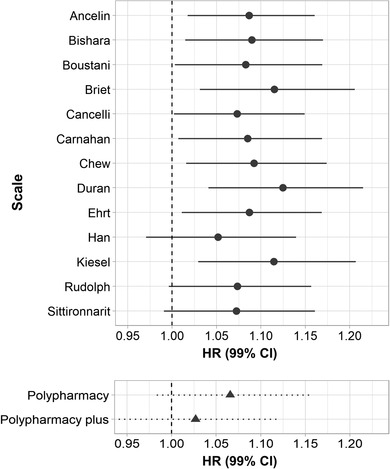
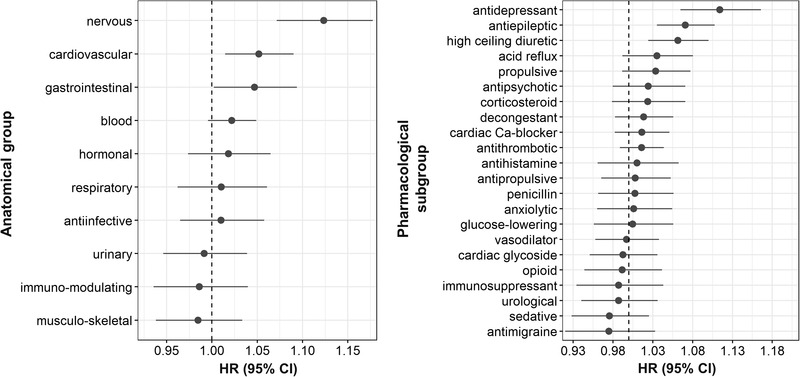
Results: AChB according to most anticholinergic scales (standardized odds ratio range: 1.027-1.125) and the slope of the AChB trajectory (hazard ratio = 1.094; 95% confidence interval: 1.068-1.119) were predictive of dementia. However, the association between AChB and dementia held only for some classes of drugs, especially antidepressants, antiepileptics, and antidiuretics.
Discussion: The heterogeneity in previous findings may partially be due to different effects for different classes of drugs. Future studies should establish differences in more detail and further examine the practicality of a general measure of AChB relating to the risk of dementia.
Keywords: anticholinergic drugs; cohort study; dementia; prescriptions drugs; primary care.
© 2022 The Authors. Alzheimer's & Dementia: Diagnosis, Assessment & Disease Monitoring published by Wiley Periodicals, LLC on behalf of Alzheimer's Association.
Conflict of interest statement
REM has received consulting fees from the Epigenetic Clock Development Foundation and speaker fees from Illumina. TCR has received fees for medicolegal work from private solicitors. SRC has received speaker fees from the Society of Biological Psychiatry. GMT has received consulting fees for grants funded by the NIH. JM has nothing to disclose.
Figures
References
Grants and funding
LinkOut - more resources
Full Text Sources